


Your Fitness Peaks at 35 (but that's not the problem)

The four fitness leaks after 35
What you'll learn:
- Why physical ability can start declining from around 35 - and why that is not the whole story
- How to spot the four fitness leaks: engine, strength, recovery and function
- What each leak actually feels like for active people, from harder hills to slower recovery
- Simple, practical ways to plug each leak and stay strong, mobile and hard to break
There is a strange thing that happens to active people after 35.
You can still run, ride, swim, lift or hike. You still feel fitter than most people your age. You may even be training for events that sound unhinged to everyone else.
But then real life asks a different question.
Can you sprint for a bus? Carry two heavy bags without folding sideways? Get off the floor without making the noise your dad used to make? Twist, reach, jump, grip, lift, balance and recover without everything feeling like a formal negotiation?
That is when you realise fitness is not one thing. It leaks in different places.

You might be great at digging deep on a climb, but how do you feel if you have to sprint for a bus?!
The age fitness starts to decline
A 47-year Swedish study from Karolinska Institutet found that physical ability starts to decline from around age 35. That includes fitness, strength and muscle endurance.
Cheerful, we know.
But this does not mean you wake up on your 35th birthday as a haunted deckchair. The decline is gradual. More importantly, it is not fixed. The same research found that people who became active later in adulthood still improved their physical capacity.
So the useful question is not: “Am I getting older?” You are. Sorry.
The better question is: “Where is my fitness leaking first?”
Fitness does not disappear. It leaks.
Most ageing fitness advice treats decline as one big thing. You are either fit or unfit. Improving or declining. Real life is messier than that.

You can swim for days, but how functional is your fitness?
You might still have a brilliant aerobic engine, but no useful strength. You might still be strong in the gym, but recover terribly. You might be able to ride for hours, but feel useless carrying heavy shopping, chopping wood or sprinting for a train.
That is why the four leaks matter. They help you stop thinking about fitness as one vague thing and start spotting the areas that need attention.
The Engine Leak
What it feels like
The easy pace is not quite as easy. Hills take a little more out of you. You can still hit the numbers, but the cost has gone up. The session you used to bluff your way through now needs a proper warm-up, proper fuelling and slightly less optimism.
For runners, cyclists and triathletes, this can feel personal. Your engine still works, but the top-end snap needs more coaxing. The same effort does not always give the same result.

Even if you've never stepped foot on a track before, now's the time. Adding shorter, more intense efforts will kick your engine into another gear
What it really means
Your aerobic capacity is still very trainable, but it needs maintaining. After 35, you cannot rely forever on old miles, old PBs or the fact you were “pretty handy” in 2014.
The engine is not broken. It just wants servicing.
How to plug the leak
Keep doing the easy work, because it still matters. The problem is not that easy sessions are pointless. It is that too many people either avoid them completely or turn every session into a slightly angry tempo effort.
Build your week around consistency first: regular aerobic work, one harder session when appropriate, and enough fuelling to stop long sessions becoming survival training. If hills feel harder, do not just avoid hills. Add short climbs, controlled intervals or steady efforts that remind your engine how to work.
You do not need to train like a professional. You just need to stop assuming yesterday’s fitness will pay today’s bills.

Kettlebells provide a superb workout which challenges the body much more dynamically than traditional cardiovascular training (and even resistance machines too)
The Strength Leak
What it feels like
Heavy things feel heavier than they should. Muscle is easier to lose and harder to build. You feel less powerful, less robust and more aware of bits of your body that used to remain silent.
This leak can hide especially well in endurance athletes. You are fit enough to train for hours, so you assume you are strong. Then you lift a suitcase, carry compost, move furniture or sprint uphill and discover your body has been outsourcing strength to hope.
What it really means
Strength stops being a bonus and becomes insurance. It protects muscle, supports joints, improves resilience and helps keep you useful outside your chosen sport.
You do not need to become a bodybuilder. But after 35, you do need to give your body a reason to keep hold of strength.

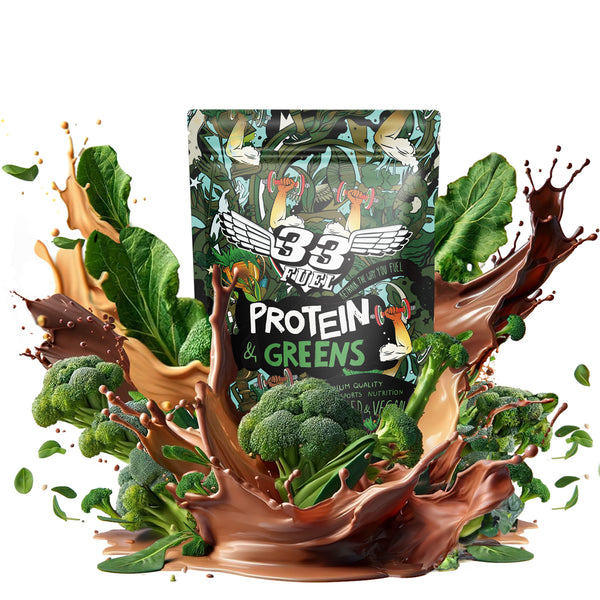
Ensure you're getting enough protein to recover effectively
How to plug the leak
Lift heavy enough to matter. That does not mean destroying yourself in the gym or walking around with a shaker bottle permanently attached to your hand. It means giving your muscles a clear message: we still need you.
Start simple. Squat, hinge, push, pull and carry. Twice a week is enough for most people to make a real difference if they do it consistently. Focus on controlled, useful movements rather than circus tricks for social media.
And eat enough protein. Not because protein is magic, but because your body cannot rebuild what you have not given it the materials for. Train the muscle, feed the muscle, keep the muscle. It is not glamorous. It works.
The Recovery Leak
What it feels like
The session itself might still feel fine. The next day is where the invoice arrives.

Honestly, the power of sleep is ALWAYS underestimated. Protect those 8 hours with your life!
One poor night’s sleep hits harder. A stressful week changes the feel of training. Under-fuel a long session and you do not just feel tired, you feel hollowed out. Try to train hard on caffeine, stubbornness and whatever was left in the fridge, and your body starts filing complaints.
What it really means
Recovery becomes part of training, not something that magically happens in the background.
Protein matters. Real food matters. Sleep matters. Fuelling hard sessions properly matters. Your body is not being difficult. It is simply less tolerant of nonsense than it used to be.
How to plug the leak
Stop treating recovery as the soft bit. It is where the improvement actually happens.
That means eating properly after hard sessions, especially when life is busy and your first instinct is to shower, work, parent, commute or stare into the fridge like it owes you answers. Get protein in. Get real food in. Replace what you used. Do the boring bit before your body sends the reminder in the form of heavy legs, bad sleep and a mysterious hatred of stairs.

If you need a daily protein boost, grab an Eroica Protein Bar - 20g protein, nutritent-dense and darn-delicious. The perfect healthy mid-afternoon treat
Sleep is not always fully under your control, but your habits are. Less late-night scrolling, less heroic under-fuelling, fewer hard sessions stacked on top of stress. Recovery is not weakness. It is training with the adaptation included.
The Functional Leak
What it feels like
This may be the most overlooked leak of all.
It is possible to be sport-fit but life-fragile. You can ride for four hours but feel useless carrying heavy bags. You can run a marathon but be ruined by sprinting for a bus. You can finish an Ironman, but ask your hips to squat, twist or climb over a fence and suddenly there is paperwork.
Functional fitness is the stuff that makes you capable in the real world: mobility, grip strength, balance, rotation, sprint power, loaded carries and the ability to move well without needing a full risk assessment.

I know from personal experience what it's like to be "fit" (ie, Ironman fit) but unable to undertake pretty simple chores without being exhausted by them!
What it really means
Fitness should make you better at life, not just better at your chosen event.
Your sport probably makes you good at a narrow set of repeated movements. That is useful, but it is not the full picture. Real life asks for awkward strength, sudden movement, rotation, grip, balance and the ability to get off the floor without producing a noise from the Victorian era.
How to plug the leak
Train the movements your sport ignores.
Carry things. Hang from things. Squat. Hinge. Rotate. Sprint occasionally. Get down to the floor and back up again. Add short mobility work often enough that it becomes normal rather than a punishment.
This does not need to be complicated. Carry the shopping in one trip. Add farmer’s carries at the gym. Do a few controlled sprints on fresh legs. Spend five minutes opening up your hips and back before they start behaving like a locked shed.
You do not need to flip tyres in a car park. You just need to be harder to break.

Just one spoonful of Ultimate Daily Greens each day floods your body with essential vitamins and minerals - for just 99p!
The goal is not to be young again
The goal is not to be 25 again. Nobody needs that haircut twice.
The goal is to be strong, useful, mobile, hard to break and annoyingly difficult to keep up with.
Because after 35, fitness is not about pretending you are not ageing. It is about becoming the sort of person who ages brilliantly anyway.
More performance boosting content
From the YouTube Channel
From the Blog
Telomeres, Ageing and UPFs: What You Need to Know
How to Lose Fat Without Losing Muscle
Why Your Testosterone Isn’t Improving (And How to Fix It)
7 Natural Ways to Improve Your Sleep & Recovery
Testosterone by Age: What to Expect in Your 30s, 40s, 50s and Beyond
Shop our award-winning sports nutrition