


Why you're not losing weight despite all that training

What you'll learn:
- Why more training doesn't automatically mean more fat loss
- Why under-fuelling your sessions can stall fat loss rather than speed it up
- Seven fixes that fit around work, family and 5 to 8 hours of training a week
The short answer: if you're training regularly and the scale won't budge, it's rarely about effort. Your body compensates for extra exercise by burning less elsewhere, your watch overestimates what you've burned, and under-fuelling your sessions leaves you hungrier, more stressed and less likely to lose fat. Add short sleep and a busy job, and progress stalls. The fix isn't eating less or training more. It's fuelling the work better.
You know the pattern. Three or four runs a week, a couple of gym sessions, maybe a longer ride at the weekend if the family diary allows. You're fitter than you've been in years and your parkrun time is coming down. Yet the belt's on the same notch it was in January.
It isn't because you're lazy or lacking willpower. Your body is simply cleverer, and more stubborn, than the maths on your watch suggests. Here's what's really going on.
Why am I not losing weight when I exercise a lot?
Most of us assume exercise works like a bank account: burn 600 calories on a run and that's 600 calories off the balance. In reality, your body treats a big withdrawal as a reason to start saving.
The largest study on this pooled data from more than 1,700 adults living normal lives. On average, their bodies compensated for around 28% of the calories burned through extra activity by burning less at rest. So only about 72% of that run actually shows up as extra burn. Compensation was also greater in people carrying more body fat, which may be why fat loss gets harder before it gets easier.
Exercise still matters for fat loss. You just can't out-train the maths, and the harder you push without support, the more your body pushes back.
Are you eating back more than you burn?
Your watch is probably flattering you. When Stanford researchers tested seven popular wrist-worn trackers, heart rate was impressively accurate but calories were not: even the best device was out by an average of 27%, and the worst by 93%. Errors were bigger for men and for people with a higher BMI.
So if your watch says 900 calories and you "earn" a takeaway and a couple of pints, you may be eating back more than you used. That's not a reason to count every calorie, just to stop treating the watch number as a licence to eat.
There's a sneakier one too. After a hard 6am session, most of us take the lift, sit through meetings and sink into the sofa that evening. That everyday movement can add up to hundreds of calories a day, and when it drops it quietly cancels out some of your training.

Great for heart rate, not so great for calories
Are you under-fuelling your training?
This is the one that surprises people most. Plenty of us try to help fat loss along by training on empty, skipping the meal after a session or getting round a long run on water alone. It feels disciplined, but it often backfires.
Researchers studying male cyclists, triathletes and runners found that those who spent long stretches of the day in a big energy hole had a suppressed resting metabolism and higher cortisol, the stress hormone, even though their total daily calories were similar to athletes whose metabolism was normal. A study in female endurance athletes found the same pattern. In other words, it's not just how much you eat that matters, but when. Big gaps around training tell your body food is scarce, so it conserves energy and ramps up stress.
Train hungry and you're also more likely to have a flat session, get home ravenous and eat whatever's nearest, and recover poorly for the next one. More on the stress side in why stress makes you gain belly fat.

Fuelling sufficiently before a key session goes a long way
When under-fuelling becomes a health problem
Pushed too far for too long, this can become REDs (Relative Energy Deficiency in Sport). It was long seen as an issue for young female athletes, but the International Olympic Committee's 2023 consensus statement makes clear it affects men and amateurs too.
Watch for constant tiredness, low mood, a drop in libido, picking up every cold going, niggles that won't heal (especially bone stress injuries) and performance going backwards. For women, irregular or missed periods are a key warning sign. If several sound familiar, speak to your GP or a sports dietitian, or listen to our podcast on RED-S with Renee McGregor.
Is it water and muscle, not fat?
The scale tells you what you weigh, not what that weight is made of. Each gram of carbohydrate stored in your muscles brings roughly three grams of water with it, harder training makes muscles hold extra fluid while they repair, and new gym work can add muscle. A stable weight with a shrinking waist is a win, not a stall.
Creatine can add a little water weight too (more in is creatine safe?). For better ways to track progress, see our 6 signs you're burning fat.
Are sleep and stress stalling you?
Early alarm for a run, a long day at work, kids' activities, then emails late into the evening. It's a familiar week, and it quietly undermines fat loss.
In one well-known study, people on the same reduced-calorie diet lost the same weight whether they slept 8.5 or 5.5 hours a night. But on short sleep, they lost 55% less fat and more muscle instead, and they felt hungrier. If you regularly cut sleep to fit training in, you may be getting less out of both.

Sometimes the best session for fat loss is an extra hour in bed
What to do instead: 7 fixes that actually work
None of these involve eating less or adding another session.
- Fuel your key sessions. Have something small before harder or longer sessions, such as a banana, toast with nut butter or a natural energy bar, and take fuel on runs or rides over 75 to 90 minutes. See carb fuelling done right.
- Don't skip the meal after training. Eat protein and carbs within an hour or two of finishing to close those long energy gaps.
- Get protein in every meal. It keeps you fuller and helps you hold on to muscle, which matters more after 40. Spread it across breakfast, lunch and dinner.
- Keep two short strength sessions a week. They protect muscle and make you a more robust runner or rider. More in how to lose fat without losing muscle.
- Keep moving on rest days. Walk the dog, take calls on foot, use the stairs.
- Protect your sleep. Aim for 7 to 9 hours. After a rough night, the extra hour in bed will often do more than a 5am session.
- Judge progress over weeks, not days. Weight jumps around with water, salt and carbs. Look at the monthly trend alongside how your clothes fit and how you're training.
When to get help
If nothing changes over a couple of months, or you feel exhausted all the time, see your GP: thyroid problems, some medications and other conditions can affect weight. And if food, weight or training has started to feel stressful or all-consuming, please talk to someone. Your GP is a good start, and the UK charity Beat offers free, confidential support for men as well as women.
Frequently asked questions
Can you exercise too much to lose weight?
Exercise doesn't stop you losing weight, but more isn't always better. Your body compensates for part of what you burn, and heavy training without enough food can raise stress hormones and suppress your metabolism. At 5 to 8 hours a week, fuelling and recovering well matters more than adding sessions.
Why am I gaining weight after starting to run?
Usually it's water, not fat. New training makes muscles store more carbohydrate, which holds water, and retain fluid while they repair. Give it a few weeks and judge progress by your waist, not just the scale.
Should I train fasted to burn more fat?
Short, easy sessions fasted are fine if you feel good. Regularly doing harder or longer sessions on empty tends to make training worse, increase hunger later and add stress, which can work against fat loss.
How accurate is my watch at counting calories?
Not very. Research shows wrist trackers can be out by anywhere from about 27% to more than 90% for calories, even when heart rate is accurate. Use it as a rough guide, not a target to eat back.
Is it harder to lose weight after 40?
It can be, mainly because we lose muscle and sleep less well as we age, and life gets busier. Strength training, enough protein, good sleep and well-fuelled training all help counter that.
Fuel the work, don't fight it
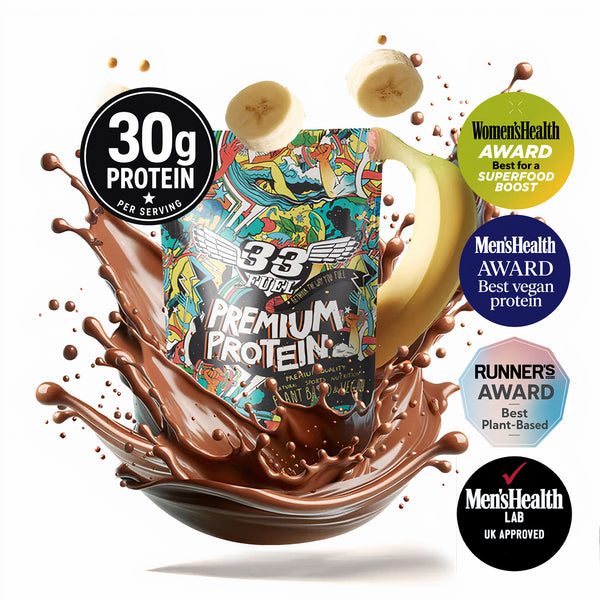
Fuelling properly is easier with real food on hand. Amore Natural Energy Bars are made from real fruit and nuts, ideal before a session or in your pocket on a long run or ride. After training, Premium Protein gives you 30g of complete plant protein per serving. Protein contributes to the growth and maintenance of muscle mass.
Fuel smarter, not less
UPF-free, real food sports nutrition. New subscribers enjoy 15% off their very first order. Shop Premium Protein
More performance boosting content
From the Blog
How to lose fat without losing muscle
Carbs are back: high carb fuelling done right
Creatine for runners, cyclists and triathletes
This article is for general information only and isn't a substitute for medical advice. If you're worried about your health, weight or relationship with food, speak to your GP.